Membrane Coating Roofing in Colorado & Eastern Utah
If your commercial building has an existing TPO, EPDM, or other single-ply membrane roof that is aging, leaking, or losing its reflective performance, full replacement is not your only option — and in many cases, it is not your best one. A membrane coating roofing system restores your existing roof from the outside in: repairing seams, reinforcing vulnerabilities, and applying a seamless elastomeric coating that stops leaks, reflects heat, and extends the roof's life by years.
Altitude Roofing LTD applies membrane coating roofing systems for commercial properties across Colorado and eastern Utah, delivering a cost-effective path to a fully restored, energy-efficient roof without the disruption, expense, and waste of tear-off and replacement.
What Is Membrane Coating Roofing?
Membrane coating roofing is the process of cleaning, repairing, and applying a high-performance elastomeric coating system directly over an existing single-ply membrane roof — typically TPO, EPDM, modified bitumen, or similar substrates. The coating adheres to the existing membrane, reinforces degraded seams with embedded fabric tape, and creates a new, seamless, waterproof surface over the entire roof.
Unlike a standard roof coating applied in a single pass, a properly executed membrane coating system is a layered process:
- The existing membrane is thoroughly cleaned and inspected
- Problem areas — cracked seams, open laps, failed flashings, blisters — are repaired before coating
- A base coat is applied, and seam areas are reinforced with polyester fabric embedded in the wet coating
- A reflective finish coat is applied to the full roof surface at the specified coverage rate
The result is a continuous, seamless, waterproof membrane bonded to the existing roof — with a bright white reflective surface that reflects up to 85% of the sun's heat.
And when the coating eventually reaches the end of its service life — years from now — a simple recoat renews the protection without tearing off the roof. This recoating cycle can be repeated for the life of the building, permanently eliminating future tear-off costs.
Is Membrane Coating Right for Your Roof?
Membrane coating is the right solution when:
- Your existing TPO, EPDM, or single-ply membrane is structurally sound but showing surface deterioration — crazing, cracking, dirt accumulation, or fading reflectivity
- You have seam separations or isolated leaks but the overall membrane is still adhered and intact
- Your roof is 10–20 years old and approaching the point where replacement would normally be considered
- You want to avoid the capital expense and business disruption of a full tear-off and replacement
- Your building's roof deck and insulation are in good condition — the problem is at the membrane surface, not below it
Membrane coating is not the right solution when:
- The existing membrane has widespread delamination, is no longer adhered to the substrate, or has failed structurally
- There is trapped moisture in the insulation or roof deck below the membrane
- The roof deck itself is damaged, rotted, or structurally compromised
Not sure which category your roof falls into? We'll conduct a thorough inspection — including checking for moisture in the substrate — and give you an honest written assessment before recommending any course of action.
Why Membrane Coating Performs Well in Colorado's Demanding Climate
Colorado and eastern Utah put commercial roofing systems through some of the most extreme conditions in the country. UV intensity at altitude is significantly higher than at sea level, and the dramatic temperature swings that characterize mountain and high desert climates stress single-ply membranes in specific ways:
UV Degradation at High Altitude
TPO and EPDM membranes that were bright white and highly reflective when installed can become grey, chalky, and significantly less reflective over time as UV exposure breaks down the surface layer. A membrane coating system restores that reflectivity — and the fresh elastomeric surface layer provides renewed UV protection that slows further degradation.
Thermal Cycling and Seam Stress
Colorado's temperature swings — sometimes exceeding 40°F in a single day — cause membrane roofing to expand and contract repeatedly. Over years, this thermal cycling fatigues seams and laps, causing separation that leads to leaks. Membrane coating with fabric reinforcement at the seams bridges these failures and creates a continuous barrier that accommodates movement without cracking.
Hail Impact on Aged Membranes
An aging TPO or EPDM membrane that has become brittle through UV exposure is significantly more vulnerable to hail impact than a fresh membrane. Elastomeric coating restores flexibility to the roof surface, improving its ability to absorb hail impact without cracking or puncturing.
Snow and Ice Performance
In Pagosa Springs, Durango, and Colorado's mountain communities, heavy snowloads and ice damming can stress roofing systems at vulnerable points — drains, perimeter flashings, and seams. Membrane coating reinforces these areas specifically, and the seamless coating surface prevents the water infiltration that ice damming can force under conventional lap seams.
Roof Evaluation
We begin by inspecting your current roofing system and discussing your goals, budget, and design preferences.
Customized Roofing Recommendation
Our experienced team helps you determine whether standing seam metal roofing is the right solution for your home and explains your available options.
Professional Installation
Using proven installation techniques and quality materials, we install your new roofing system with precision and attention to detail to ensure long-lasting performance.
Final Inspection
Before completing the project, we carefully inspect every aspect of the installation to ensure your roof meets our high standards for quality and craftsmanship.
Key Benefits of Membrane Coating Roofing
- Extends existing membrane roof life by 10–20+ years without replacement
- Stops active leaks and seals degraded or separated seams
- Fabric-reinforced seams resist future thermal movement and separation
- Restores reflectivity — reflects up to 85% of solar heat
- Reduces cooling costs — many building owners see 20–30% HVAC savings
- Eliminates tear-off — no landfill waste, no structural disruption
- Expensed as maintenance rather than capitalized — favorable tax treatment
- Annual cleaning is all that is required for ongoing maintenance
- Recoatable — when the finish coat ages, a simple recoat renews protection without a new base system
- Performed over TPO, EPDM, modified bitumen, and other approved substrates
- Minimal business disruption during the application process
- Available across all of Colorado and eastern Utah
Our Membrane Coating Roofing Process
Step 1: Roof Inspection & Moisture Survey
We begin with a detailed inspection of your existing membrane — evaluating adhesion, seam condition, blistering, surface deterioration, and drainage. For membrane coating applications, we also assess whether there is trapped moisture in the insulation below the membrane, which would affect whether coating is appropriate. We document all findings and provide a written report.
Step 2: Surface Cleaning
The existing membrane is pressure washed and cleaned to remove dirt, algae, mildew, chalking, and any contaminants that would prevent proper coating adhesion. Surface preparation is the most critical factor in coating longevity — a coating applied to a dirty or contaminated surface will fail prematurely regardless of product quality.
Step 3: Repair of Seams, Flashings & Problem Areas
All identified problem areas are repaired before coating is applied. This includes re-adhering lifted seams and laps, resealing open joints, repairing or replacing failed flashings, and treating any blisters or damaged sections. Coating over unrepaired problems does not solve them — it conceals them temporarily. We fix the problems first.
Step 4: Seam Reinforcement with Embedded Fabric
All seams, laps, and transitions are reinforced with polyester fabric tape embedded in the wet base coat. This step adds tensile strength across the most vulnerable points of the existing membrane — seams that have been stressed by thermal cycling — and prevents future separation even as the building continues to move through temperature changes.
Step 5: Base Coat Application
A premium elastomeric base coat is applied to the full roof surface at the manufacturer's specified coverage rate. The base coat bonds to the cleaned membrane, fills minor surface irregularities, and provides the primary waterproofing layer for the system.
Step 6: Reflective Finish Coat Application
One or more white reflective finish coats are applied over the cured base coat to the specified dry film thickness. The finish coat provides UV protection, maintains surface reflectivity, resists dirt pickup, and gives the roof its bright, clean appearance. The full coating system cures into a continuous, seamless, waterproof surface across the entire roof.
Step 7: Final Inspection & Documentation
We conduct a post-application walkthrough, inspect coating coverage and seam reinforcement, and document the completed work with photos. You receive written warranty documentation for both the coating materials and our workmanship before we leave the job.
The Recoating Advantage: Eliminating Future Tear-Off Costs
One of the most significant long-term financial advantages of a membrane coating roofing system is the ability to recoat rather than replace when the surface coating eventually ages.
A conventional TPO or EPDM roof has a finite service life. When it reaches the end, the only option is tear-off and replacement — a major capital expense that disrupts business operations and sends thousands of pounds of material to the landfill.
With a membrane coating system, when the finish coat ages — typically after 10 to 15 years — a fresh top coat renews the system's waterproofing and reflectivity at a fraction of replacement cost. This recoating cycle can be repeated multiple times for the life of the building, permanently eliminating future tear-off costs for as long as the underlying membrane and deck remain sound.
For building owners and property managers with long-term holding horizons, this lifecycle cost advantage is substantial. We're happy to model out the cost comparison for your specific building during the estimate process.
Frequently Asked Questions — Membrane Coating Roofing
What types of roofs can receive a membrane coating?
Membrane coating systems are designed for existing single-ply membrane roofs — primarily TPO and EPDM, which are the most common commercial flat roof systems in use today. Modified bitumen and some other substrate types are also eligible. The key requirement is that the existing membrane be structurally sound, properly adhered, and free of trapped moisture in the substrate below. We confirm compatibility during the free inspection.
How long does a membrane coating system last?
The base system — base coat, fabric reinforcement, and finish coat — typically provides 10 to 15 years of primary service life under Colorado and eastern Utah conditions. After that, a recoat of the finish layer renews the system. With periodic recoating, the underlying system can protect the building indefinitely — or for as long as the base membrane and roof deck remain structurally sound.
How much does membrane coating roofing cost compared to replacement?
Membrane coating typically costs 30% to 60% less than full membrane replacement for the same roof. The exact savings depend on the condition of your existing roof, the coating system specified, and roof complexity. We provide free, itemized estimates so you can compare the two options side by side before making a decision.
Will a membrane coating stop an active leak?
Yes — when applied as part of a complete restoration process that includes repairing the source of the leak before coating. We do not coat over active leaks without first addressing the underlying problem. Once the source is repaired and the coating system is fully applied, the seamless coating surface prevents water infiltration across the entire roof.
How long does the application process take?
Most commercial membrane coating projects are completed in 3 to 7 business days, depending on roof size, the extent of repairs needed, and weather conditions. Because there is no tear-off involved, the process is faster and less disruptive than replacement.
Is membrane coating tax-deductible?
In most cases, membrane coating is treated as a maintenance or repair expense — deductible in the year it's performed rather than capitalized and depreciated like a full roof replacement. This is a meaningful financial advantage for many business owners. We recommend confirming the tax treatment with your accountant, as specific rules can vary.
Do you service the whole state of Colorado?
Yes. Altitude Roofing LTD serves commercial clients statewide across Colorado — from the Front Range and Denver metro to the Western Slope, Four Corners, mountain communities, and southern Colorado — as well as eastern Utah. Contact us to confirm scheduling and logistics for your location.
Do you offer a warranty?
Yes. We provide written documentation of both the manufacturer's material warranty and our installation workmanship warranty before work begins. Warranty terms vary by coating product and project scope, and we'll outline exactly what's covered during the estimate process.
Roof Evaluation
We begin by inspecting your current roofing system and discussing your goals, budget, and design preferences.
Customized Roofing Recommendation
Our experienced team helps you determine whether standing seam metal roofing is the right solution for your home and explains your available options.
Professional Installation
Using proven installation techniques and quality materials, we install your new roofing system with precision and attention to detail to ensure long-lasting performance.
Final Inspection
Before completing the project, we carefully inspect every aspect of the installation to ensure your roof meets our high standards for quality and craftsmanship.
Service Area
Altitude Roofing LTD provides membrane coating roofing services throughout:
Colorado (Statewide)
- Denver Metro & Front Range
- Colorado Springs & Pueblo
- Fort Collins & Northern Colorado
- Boulder & Longmont
- Grand Junction & the Western Slope
- Durango, Cortez & the Four Corners Region
- Pagosa Springs & Archuleta County (headquarters)
- Steamboat Springs & Northwest Colorado
- Glenwood Springs, Aspen & Roaring Fork Valley
- Salida, Gunnison & the Arkansas River Valley
- Trinidad & Southern Colorado
- All rural and mountain communities statewide
Eastern Utah
- Moab & Grand County
- Price & Carbon County
- Vernal & Uintah County
- Blanding, Monticello & San Juan County
- Castle Dale, Ferron & Emery County
- Surrounding eastern Utah communities
Not sure if we reach your location? Call or text us — we travel for commercial projects and will confirm availability.
Get a Free Membrane Coating Estimate
Wondering if your existing membrane roof is a candidate for coating rather than replacement? Contact Altitude Roofing LTD for a free, no-obligation inspection and estimate. We'll assess your roof honestly, confirm whether coating is the right solution for your building, and give you a detailed written quote — so you can make a confident, informed decision.
Call or Text Us | Headquarters: Pagosa Springs, CO | Serving All of Colorado & Eastern Utah
Recommended Photography — Membrane Coating Roofing Page
Buyers who land on this page typically have an aging TPO or EPDM roof and are evaluating whether to coat or replace. Photos that show the problem clearly, then the solution compellingly, are the most persuasive content you can put on this page.
1. Aged / Deteriorated Membrane (Before): Close-up of a weathered TPO or EPDM roof — grey, chalky surface, cracked or separated seams, dirt accumulation. Buyers immediately recognize this as their own roof's condition. This 'before' image is as important as any 'after' on a coating page.
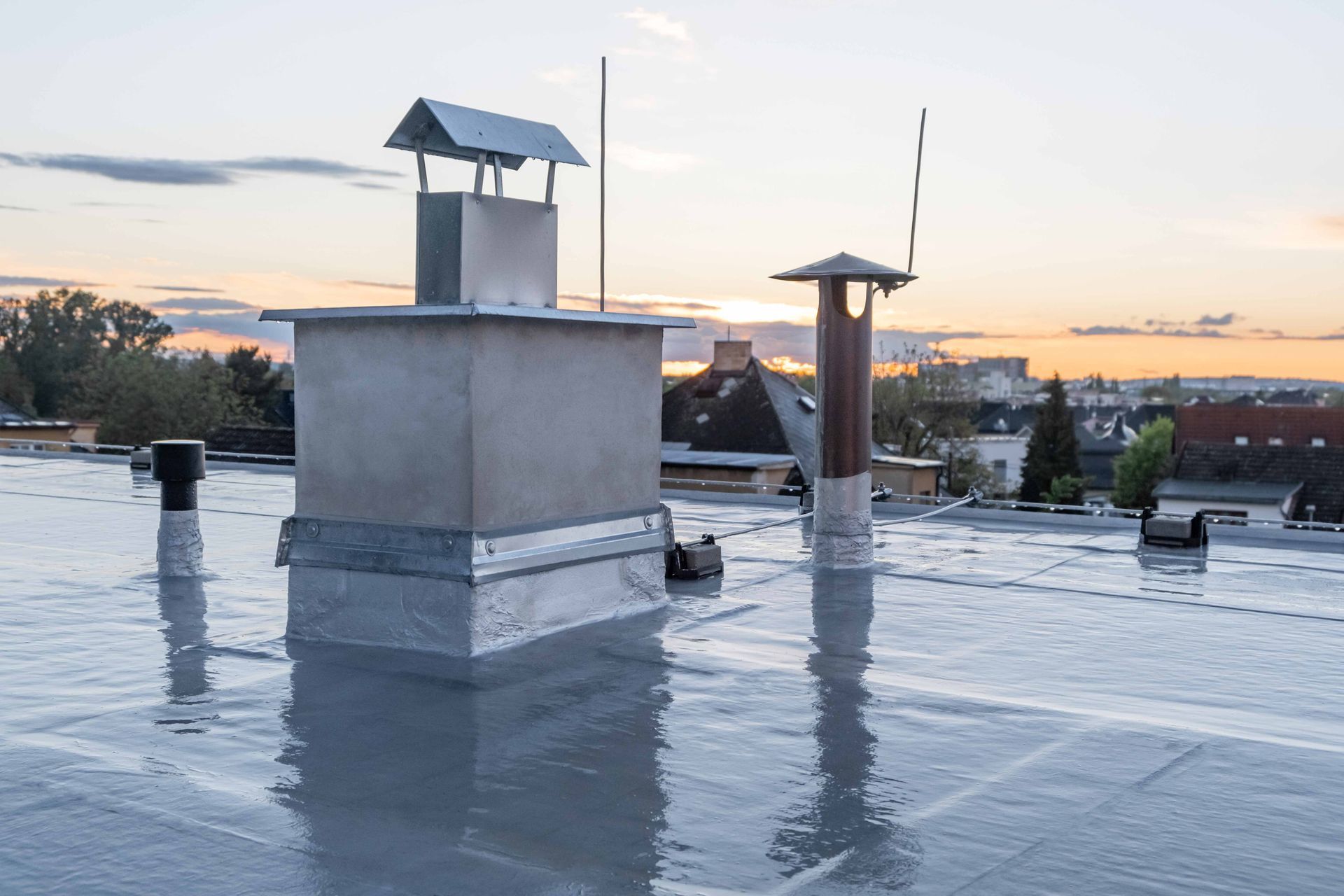
2. Completed White Coating (After): The same or similar roof after membrane coating — bright white, seamless, clean. Side-by-side or slider before/after comparisons are especially powerful and increase time on page.
3. Seam Repair & Fabric Reinforcement: Close-up of fabric tape being embedded into wet base coat along a seam or lap. Visually communicates the difference between a quality membrane coating system and a basic paint-over — a key trust-builder with informed buyers.
4. Coating Application in Progress: Wide shot of crew applying elastomeric coating with sprayers or rollers across a large commercial flat roof. Shows scale, organization, and professional process.
5. Drone / Elevated Shot of Completed Roof: Overhead drone or elevated wide-angle shot of a completed white membrane coating on a commercial building — ideally in a Colorado setting. Shows the seamless, uniform coverage across the full roof surface.
6. Reflective Surface in Colorado Sun: Completed white roof in bright Colorado sunlight — the visual reflectivity reinforces the energy efficiency messaging instantly. Mountain backdrop preferred.
7. Inspection / Moisture Check: Roofer conducting inspection — checking seams, probing for delamination, or taking notes. Supports the 'we inspect thoroughly before we recommend anything' messaging and communicates a professional, systematic approach.
8. Completed Building Exterior: Full exterior shot of a commercial building with a newly coated membrane roof — warehouse, office, retail, HOA — showing the roof in context of the complete property.
PHOTO TIP: If you have project photos from multiple regions of Colorado or eastern Utah, caption them with location — 'Denver warehouse re-coat', 'Durango retail center restoration', etc. Location-tagged project photos build geographic credibility across the full statewide service area and improve local SEO signals for those regions.





