PVC Single Ply Membrane Roofing in Colorado & Eastern Utah
When a commercial building needs a high-performance, long-lasting roof for a flat or low-slope application, PVC single ply membrane roofing is one of the most proven and widely trusted solutions in the industry. Altitude Roofing LTD installs PVC single ply membrane roofing systems for commercial properties across Colorado and eastern Utah — delivering superior waterproofing, outstanding durability, and energy-efficient reflective performance that holds up in virtually any climate or conditions.
Whether you're building new, re-roofing an existing structure, or upgrading from an aging system that's reached the end of its life, we'll help you determine if PVC single ply membrane is the right fit for your building — and install it right the first time.
What Is PVC Single Ply Membrane Roofing?
PVC (polyvinyl chloride) single ply membrane roofing is a flexible, factory-manufactured roofing sheet installed in a single layer over a flat or low-slope roof deck. Unlike built-up roofing (BUR) or modified bitumen systems that require multiple layers applied on-site, single ply membrane systems are engineered for consistent performance from sheet to sheet.
During installation, membrane rolls are overlapped and heat-welded at the seams — creating a continuous, watertight bond that is stronger than the membrane itself. The result is a fully adhered, mechanically fastened, or ballasted roof system that delivers exceptional waterproofing performance with a clean, uniform appearance.
PVC membrane is distinct from other single ply options like TPO and EPDM in several important ways:
- Naturally fire-resistant — PVC is inherently self-extinguishing, an important property for many commercial occupancies
- Chemical and grease resistance — PVC outperforms TPO and EPDM in environments with restaurant exhaust, chemical exposure, or industrial grease
- Heat-welded seams — mechanically stronger than adhesive-bonded seams, reducing seam failure risk
- Long track record — PVC has been used in commercial roofing for over 50 years with a well-documented performance history
- Highly reflective white surface — reduces cooling loads and qualifies for energy efficiency incentives
Why PVC Single Ply Membrane Performs Well Across Colorado and Eastern Utah
Altitude Roofing LTD serves commercial clients from Pagosa Springs to Denver, across the Front Range, the Western Slope, and into eastern Utah. Across this broad territory, the climate demands on commercial roofing vary significantly — but PVC single ply membrane is one of the few systems that performs reliably across all of them.
Colorado Mountain Communities (High Altitude)
Above 7,000 feet, UV intensity is dramatically higher than at sea level — accelerating the degradation of many roofing materials. PVC membrane's UV-stable formulation and reflective white surface are well-suited to high-altitude exposure. The membrane's flexibility handles freeze-thaw cycling and temperature-driven movement without cracking or seam separation. Heavy snowloads are managed by proper design of drainage and slope, which we assess and specify for every mountain installation.
Colorado Front Range (Denver, Colorado Springs, Fort Collins)
Front Range commercial buildings face extreme hail frequency — the Denver metro area is one of the most hail-active zones in the country. PVC membrane's puncture resistance and heat-welded seams provide strong hail protection. The high-reflectivity surface is also beneficial in the Front Range's high-altitude sun, reducing cooling costs for large commercial and industrial buildings.
Western Slope and Four Corners Region
The Western Slope and Four Corners region — including Grand Junction, Montrose, Cortez, and Durango — experience intense summer heat alongside winter snow. PVC membrane's all-season installability means we can work year-round in these climates, and the system's reflective surface is especially valuable in summer heat reduction. Chemical resistance is a meaningful advantage for the agricultural and light industrial buildings common in this region.
Eastern Utah (Moab, Price, Vernal, and Surrounding Areas)
Eastern Utah's desert climate brings intense UV, high summer temperatures, and significant temperature swings between day and night. PVC membrane's UV stability and thermal performance are well-matched to these conditions. We serve eastern Utah commercial clients with the same system quality and installation standards we bring to our Colorado work.
Key Benefits of PVC Single Ply Membrane Roofing
- Superior waterproofing — heat-welded seams create a bond stronger than the membrane itself
- Fire resistance — PVC is naturally self-extinguishing, meeting or exceeding most code requirements
- Chemical and grease resistance — outperforms TPO and EPDM in commercial kitchen and industrial environments
- Excellent wind and hail resistance — flexible membrane and strong seam welds resist uplift and impact
- High reflectivity — white surface reflects solar energy, reducing cooling costs and urban heat island effect
- All-season installation — can be installed in cold weather when other systems cannot
- Performs in all climates — proven across mountain, high desert, plains, and Front Range conditions
- Long service life — properly installed PVC membrane systems routinely perform 20–30 years
- Low maintenance — periodic inspection and seam checks are typically all that is required
- Widely accepted by building codes and insurance carriers across Colorado and Utah
Roof Evaluation
We begin by inspecting your current roofing system and discussing your goals, budget, and design preferences.
Customized Roofing Recommendation
Our experienced team helps you determine whether standing seam metal roofing is the right solution for your home and explains your available options.
Professional Installation
Using proven installation techniques and quality materials, we install your new roofing system with precision and attention to detail to ensure long-lasting performance.
Final Inspection
Before completing the project, we carefully inspect every aspect of the installation to ensure your roof meets our high standards for quality and craftsmanship.
PVC vs. TPO vs. EPDM: Which Single Ply Membrane Is Right for Your Building?
The three most common single ply commercial roofing membranes are PVC, TPO, and EPDM. Here's how they compare for Colorado and eastern Utah conditions:
PVC (Polyvinyl Chloride)
Best for: buildings with restaurant exhaust vents or grease exposure, occupancies requiring fire resistance, re-roofing over existing systems, projects requiring cold-weather installation, and applications where long-term seam integrity is the top priority. PVC has the longest commercial track record of the three systems.
TPO (Thermoplastic Polyolefin)
Best for: budget-conscious projects where chemical resistance is not a primary concern, new construction on buildings without grease or chemical exposure. TPO is heat-welded like PVC and offers similar reflectivity but has a shorter performance history and less chemical resistance.
EPDM (Ethylene Propylene Diene Monomer)
Best for: low-slope roofs in climates with moderate temperature extremes, older building types, applications where a dark surface is acceptable or preferred. EPDM uses adhesive seams (or tape) rather than heat welding, which can be a vulnerability over time. EPDM is black by default; white EPDM is available but less common.
Not sure which system is right for your building? We'll walk you through the trade-offs during a free consultation and recommend the system best matched to your building type, occupancy, climate zone, and budget.
Our PVC Single Ply Membrane Installation Process
Step 1: Roof Assessment & System Selection
We inspect the existing roof deck and substrate, evaluate drainage and slope, assess any existing insulation, and confirm the right attachment method for your building (fully adhered, mechanically fastened, or ballasted). We also evaluate any special requirements — grease exposure, fire ratings, energy code compliance — that affect system selection.
Step 2: Deck Preparation & Insulation
The roof deck is inspected for damage, moisture, and proper fastener retention. Insulation is specified and installed as needed to meet energy code requirements and provide a smooth, even substrate for the membrane. Any existing roofing that needs to be removed is disposed of properly.
Step 3: Membrane Installation
PVC membrane rolls are rolled out across the roof deck and positioned. The membrane is attached to the substrate via the specified method — mechanically fastened at the field and seams, fully adhered with approved adhesive, or ballasted with stone. Rolls are overlapped at the seams to the manufacturer's specified width.
Step 4: Seam Welding
All seam overlaps are heat-welded using hot-air welding equipment — fusing the two membrane layers into a single, continuous bond. Seam welds are tested for integrity and documented. This step is critical: improperly welded seams are the primary failure point in any single ply system, and we take seam quality seriously.
Step 5: Flashing, Penetrations & Details
All roof penetrations, curbs, drains, edges, and transitions are flashed and detailed with PVC-compatible materials and heat-welded into the field membrane. Proper detailing at penetrations is where many installations fall short — we follow manufacturer specifications precisely at every detail.
Step 6: Final Inspection & Documentation
We conduct a complete post-installation inspection, documenting seam welds, flashing details, and overall system quality with photos. You receive written warranty documentation covering both the manufacturer's material warranty and our workmanship warranty before we leave the job.
Frequently Asked Questions — PVC Single Ply Membrane Roofing
How long does PVC single ply membrane roofing last?
A properly installed PVC single ply membrane system typically lasts 20 to 30 years, and in some cases longer with regular inspection and maintenance. PVC has one of the longest documented performance histories of any single ply commercial roofing system — there are PVC roofs installed in the 1970s still performing today.
How much does PVC single ply membrane roofing cost?
PVC membrane roofing typically costs more upfront than TPO or EPDM, but the premium reflects better chemical resistance, stronger seam welds, and a longer track record. For a commercial flat roof, installed costs generally range from $8 to $18 per square foot depending on roof size, attachment method, insulation requirements, and project complexity. We provide free, itemized estimates so you can compare options clearly.
Can PVC membrane be installed in winter?
Yes — this is one of PVC membrane's meaningful advantages over some competing systems. PVC can be installed in cold weather conditions that would prevent installation of other roofing products. For Colorado and eastern Utah business owners working on tight construction timelines or dealing with emergency re-roofing situations in winter, this is a real practical benefit.
Is PVC roofing resistant to hail?
PVC membrane provides good resistance to hail impact, particularly when fully adhered or mechanically fastened at close spacing. The membrane's flexibility absorbs impact energy rather than cracking. Heat-welded seams also remain intact through hail events that can delaminate adhesive-bonded seams on other systems. For Colorado's hail-active climate — especially the Front Range and foothills — PVC's impact performance is a meaningful advantage.
What makes PVC different from TPO?
Both PVC and TPO are heat-welded single ply membranes with reflective white surfaces. The key differences: PVC has significantly better chemical and grease resistance (important for buildings with restaurant exhaust or industrial processes), a longer commercial performance history (50+ years vs. 30 for TPO), and is naturally fire-resistant. TPO is generally less expensive upfront. For most commercial applications without chemical exposure, either system can perform well — we'll help you evaluate which is the better fit for your specific building.
Does PVC roofing qualify for energy incentives?
PVC membrane's reflective white surface meets the criteria for Energy Star-rated roofing products and Cool Roof Rating Council (CRRC) standards. This may qualify your building for energy efficiency incentives, utility rebates, or LEED credits depending on your location and project type. We recommend confirming applicable incentives with your energy provider or project team.
Do you install PVC roofing across all of Colorado?
Yes. Altitude Roofing LTD serves commercial clients statewide across Colorado — including Denver, Colorado Springs, Pueblo, Fort Collins, Grand Junction, Durango, Steamboat Springs, Montrose, and all points in between — as well as eastern Utah communities including Moab, Price, Vernal, and surrounding areas. Contact us to confirm scheduling and logistics for your location.
Do you offer a warranty on PVC single ply membrane roofing?
Yes. We provide written documentation of the manufacturer's material warranty and our installation workmanship warranty before work begins. Warranty terms vary by membrane product and project scope — we'll outline exactly what's covered as part of the estimate process.
Service Area
Altitude Roofing LTD installs PVC single ply membrane roofing systems throughout:
Colorado (Statewide)
- Denver Metro & Front Range (Denver, Aurora, Lakewood, Arvada, Westminster, Thornton, Broomfield)
- Colorado Springs & Pueblo
- Fort Collins, Greeley & Northern Colorado
- Boulder & Longmont
- Grand Junction & the Western Slope
- Durango, Cortez & the Four Corners Region
- Pagosa Springs & Archuleta County (headquarters)
- Steamboat Springs & Northwest Colorado
- Montrose, Delta & the North Fork Valley
- Glenwood Springs, Aspen & Roaring Fork Valley
- Salida, Gunnison & the Arkansas River Valley
- Trinidad, Walsenburg & Southern Colorado
- All rural and mountain communities statewide
Eastern Utah
- Moab & Grand County
- Price & Carbon County
- Vernal & Uintah County
- Blanding, Monticello & San Juan County
- Castle Dale, Ferron & Emery County
- Surrounding eastern Utah communities
Not sure if we serve your area? Call or text us — we travel for commercial projects and will confirm availability for your location.
Roof Evaluation
We begin by inspecting your current roofing system and discussing your goals, budget, and design preferences.
Customized Roofing Recommendation
Our experienced team helps you determine whether standing seam metal roofing is the right solution for your home and explains your available options.
Professional Installation
Using proven installation techniques and quality materials, we install your new roofing system with precision and attention to detail to ensure long-lasting performance.
Final Inspection
Before completing the project, we carefully inspect every aspect of the installation to ensure your roof meets our high standards for quality and craftsmanship.
Get a Free PVC Roofing Estimate
Ready to explore PVC single ply membrane roofing for your commercial property? Altitude Roofing LTD provides free, no-obligation roof inspections and detailed written estimates across Colorado and eastern Utah. We'll assess your building, explain your system options, and give you the information you need to make a confident decision.
Call or Text Us | Pagosa Springs, CO | Serving All of Colorado & Eastern Utah
Recommended Photography — PVC Single Ply Membrane Roofing Page
Because PVC membrane is a less visually familiar product than metal roofing or coatings, photos that show the installation process and the finished system up close are especially valuable for buyer education and trust-building.
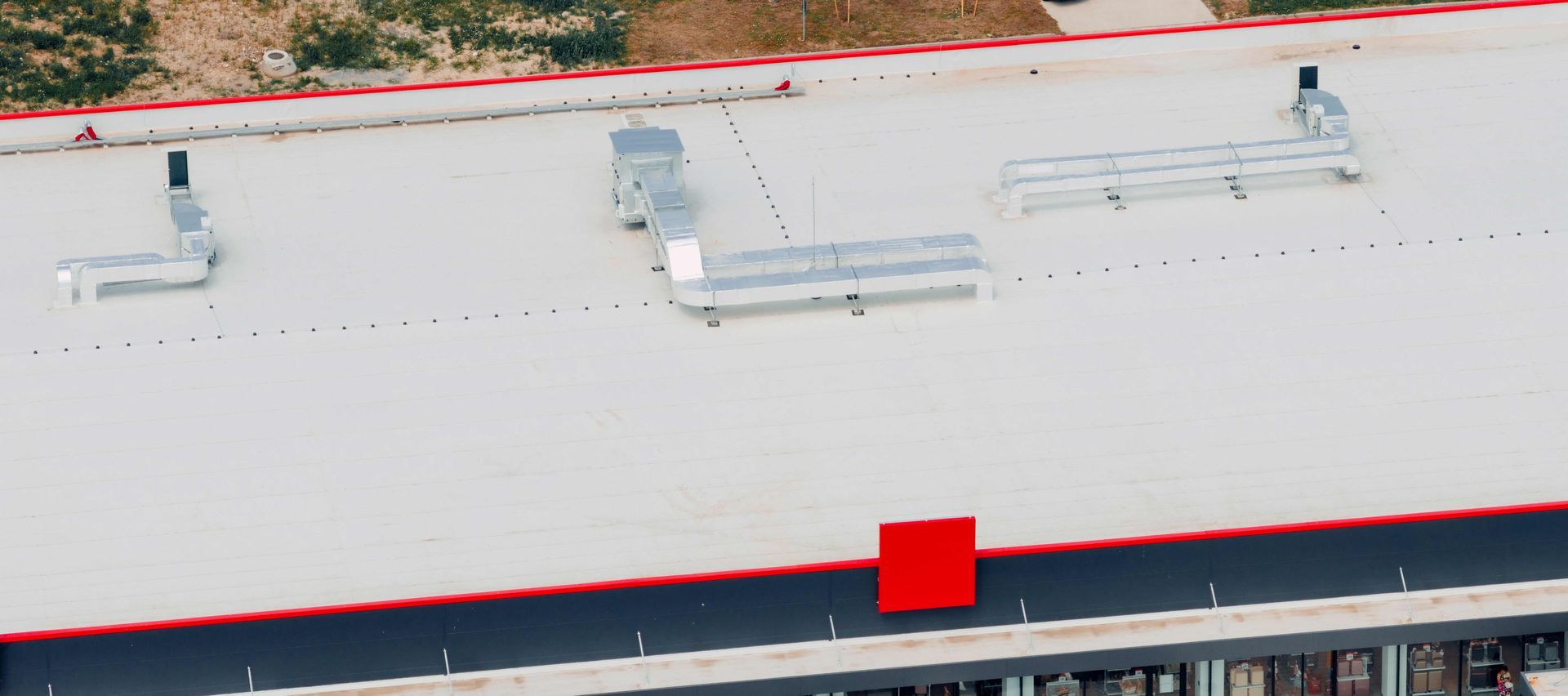
1. Hero / Banner Image: Wide overhead shot of a large commercial building with a clean white PVC membrane roof — ideally a Colorado setting (mountains, plains, or recognizable skyline visible). Shows scale, cleanliness, and local context.
2. Heat Welding Close-Up: A roofer operating a hot-air welding gun along a membrane seam. This is the most distinctive and trust-building image for a PVC page — it shows the precision process that makes the seams stronger than the membrane itself. Most building owners have never seen this process.
3. Membrane Roll-Out / Installation: Wide shot of crew rolling out large PVC membrane sheets across a flat commercial roof. Shows the scale of work and organized, professional installation process.
4. Seam Detail — Finished Weld: Tight close-up of a completed heat-welded seam showing the smooth, fused edge. Reinforces quality and craftsmanship messaging.
5. Flashing & Penetration Detail: Photo of properly flashed roof penetration (pipe, HVAC curb, drain) showing the membrane wrapped and welded tight — a detail that separates quality installers from shortcuts. Builds confidence in workmanship.
6. Reflective White Roof in Colorado Sun: Completed white PVC roof gleaming in bright Colorado sunlight — ideally with blue sky and mountains. Reinforces energy efficiency and reflectivity messaging visually.
7. Before — Aged or Failing Flat Roof: An aging flat roof with visible ponding water, cracked coating, or failing seams — helps buyers self-identify and sets up the value proposition of a new PVC system.
8. Completed Project — Full Building Exterior: Full exterior of a completed commercial project (retail center, warehouse, office, or industrial building) showing the new PVC roof in context. Works well for the portfolio/gallery and as social proof on this page.
PHOTO TIP: Given the statewide and eastern Utah service area, photos from diverse Colorado locations — mountains, Front Range, Western Slope — reinforce geographic reach. Consider captioning project photos with city/county to build local relevance across the full service territory.





