Spray Polyurethane Foam (SPF) Roofing in Colorado & Eastern Utah
Spray polyurethane foam roofing — commonly known as SPF roofing — is one of the most technically advanced and energy-efficient commercial roofing systems available today. It is also one of the least understood, which means many building owners are unaware they have access to a system that can outperform conventional roofing in insulation, waterproofing, structural strength, and long-term cost — all at the same time.
Altitude Roofing LTD installs SPF roofing systems for commercial properties across Colorado and eastern Utah. Whether you are building new, re-roofing an existing structure, or looking for a long-term solution to a chronically leaking or energy-inefficient flat roof, we will assess your building honestly and help you determine if SPF is the right fit.
What Is Spray Polyurethane Foam Roofing?
SPF roofing is created by combining two liquid components — polyol and isocyanate — that react when sprayed onto a roof surface and expand into a rigid, closed-cell polyurethane foam. The foam is applied in a continuous layer directly to the existing roof substrate, conforming to every curve, penetration, and irregular surface without seams or joints.
Once the foam has cured, it is coated with a durable elastomeric protective coating — typically acrylic or silicone — that shields the foam from UV degradation and provides the waterproof surface layer. The result is a fully adhered, seamless, self-insulating roofing system that is bonded to the roof deck from edge to edge and penetration to penetration.
SPF roofing is not a niche or experimental technology. Spray polyurethane foam has been used in commercial roofing applications for over 50 years and has an extensive documented performance history across a wide range of climate conditions — including the extreme demands of Colorado's mountain and high desert environments.
How SPF Roofing Stands Apart from Conventional Roofing Systems
Insulation and Waterproofing in a Single System
Most commercial roofing systems separate the insulation layer (rigid board insulation below the membrane) from the waterproofing layer (the membrane itself). SPF combines both functions in a single monolithic system — the foam provides R-values of approximately 6.5 per inch, and the protective coating provides the waterproof barrier. This eliminates the thermal bridging that occurs at insulation joints in conventional systems and reduces the number of distinct layers that can fail independently.
No Seams — The Primary Source of Commercial Roof Leaks
Every seam, joint, lap, and penetration in a conventional roofing system is a potential failure point. Over time, thermal cycling, wind uplift, and UV degradation cause these joints to open and leak. SPF is sprayed as a continuous liquid that expands and adheres to the substrate, then cures into a seamless solid — there are no seams to fail, no laps to delaminate, and no fastener penetrations to back out. The coating is similarly applied as a continuous film over the foam surface.
Self-Leveling Drainage Improvement
One of SPF's unique capabilities is the ability to build up foam thickness strategically in areas that drain poorly — eliminating low spots and ponding water that would require costly structural modifications to fix with any other roofing system. Eliminating ponding water dramatically extends the life of the system and prevents the accelerated membrane degradation that standing water causes.
Lightweight — No Structural Load Concerns
At approximately 50 lbs per 100 square feet for a typical installation, SPF adds very little weight to the building structure — significantly less than ballasted single-ply systems or built-up roofing. This makes SPF well-suited to buildings where structural loading is a concern, or where a lightweight re-roofing option is needed over an existing roof.
Renewable — Permanently Eliminating Tear-Off
Like membrane coating systems, SPF roofing is renewable. When the protective coating ages — typically after 10 to 15 years — a fresh coat of elastomeric or silicone coating renews the system's UV protection and waterproofing without disturbing the foam below. This recoating cycle can be repeated indefinitely for the life of the building, permanently eliminating the tear-off and replacement cycle that makes conventional roofing so expensive over time.
Why SPF Roofing Is Exceptionally Well-Suited to Colorado's Climate
Colorado and eastern Utah present a combination of climate challenges that makes SPF roofing's specific strengths especially relevant:
Superior Insulation at High Altitude
At elevations above 7,000 feet, energy loads are substantial — both heating in winter and cooling in summer. SPF's closed-cell foam provides among the highest R-values of any commercial roofing insulation available, with no thermal bridging at insulation joints. For mountain communities like Pagosa Springs, Steamboat Springs, or Telluride, SPF's insulating performance translates directly into measurable year-round energy savings.
Seamless Performance Through Freeze-Thaw Cycling
Colorado's dramatic temperature swings cause conventional roofing seams and laps to open and close repeatedly through freeze-thaw cycling. Over years, this fatigues the seams and causes leaks. SPF's seamless construction has no joints to cycle open — the foam and coating expand and contract as a unified system without creating failure points.
Ponding Water and Drainage Problem Resolution
Flat commercial roofs in mountain communities often develop drainage problems as the building settles, or because original slope design was inadequate. Ponding water is the enemy of virtually every conventional roofing membrane. SPF can be applied in tapered thickness to eliminate low spots and correct drainage without structural modifications — a capability no other roofing system offers.
Wind Uplift Resistance
SPF is fully adhered to the roof deck — there are no air spaces or membrane laps for wind to get beneath. This full adhesion provides exceptional wind uplift resistance, which is important across Colorado's range of high-wind zones — from the mountain passes to the eastern plains.
Hail Performance
While no roofing system is immune to severe hail, SPF's rigid closed-cell foam provides a measure of impact resistance that flexible single-ply membranes cannot match. The protective coating also adds a layer of surface durability. For Colorado's hail-active climate, SPF's performance compares favorably to conventional alternatives.
Roof Evaluation
We begin by inspecting your current roofing system and discussing your goals, budget, and design preferences.
Customized Roofing Recommendation
Our experienced team helps you determine whether standing seam metal roofing is the right solution for your home and explains your available options.
Professional Installation
Using proven installation techniques and quality materials, we install your new roofing system with precision and attention to detail to ensure long-lasting performance.
Final Inspection
Before completing the project, we carefully inspect every aspect of the installation to ensure your roof meets our high standards for quality and craftsmanship.
What Buildings Are the Best Fit for SPF Roofing?
SPF roofing performs well across a wide range of commercial building types and roofing situations:
- Flat and low-slope commercial roofs (the primary application)
- Buildings with chronic ponding water or drainage problems that cannot be resolved structurally
- Buildings requiring high insulation values — cold climates, high energy costs, or energy code requirements
- Re-roofing over existing substrates where tear-off is not desired or practical
- Buildings with complex rooflines, multiple penetrations, or irregular surfaces that are difficult to detail with sheet membranes
- Metal buildings and pre-engineered structures with exposed fasteners or complex seaming
- Agricultural, ranch, and rural commercial buildings across Colorado and eastern Utah
- Churches, community centers, schools, and other facilities with long planning horizons where lifecycle cost matters
- HOA common buildings, clubhouses, and amenity facilities
SPF Roofing vs. Conventional Commercial Roofing: A Direct Comparison
SPF vs. TPO / PVC / EPDM Single Ply
Single ply membranes are installed as sheet goods with seamed joints — each seam a potential leak point. They require separate insulation below the membrane. They cannot self-level drainage problems. They have a finite life of 15–25 years before tear-off and replacement. SPF eliminates seams, integrates insulation, can correct drainage, and is renewable indefinitely with recoating.
SPF vs. Built-Up Roofing (BUR)
Built-up roofing is heavy, labor-intensive, and difficult to detail around penetrations. It has no inherent insulation value. SPF is lightweight, fast to install, self-insulating, and conforms seamlessly to complex roof geometries. SPF also outperforms BUR in energy efficiency by a significant margin.
SPF vs. Modified Bitumen
Modified bitumen offers good durability but requires torch or adhesive application with seamed laps. It provides no insulation. SPF installs without seams or torch application, provides substantial insulation, and is renewable. For re-roofing over existing modified bitumen, SPF is often the most cost-effective path to a long-term solution.
Our SPF Roofing Installation Process
Step 1: Roof Assessment & System Design
We begin with a thorough inspection of the existing roof — evaluating substrate condition, drainage, moisture content, and structural load capacity. We assess whether any areas need repair or remediation before foam application, and design the foam thickness and taper to correct drainage issues and meet insulation requirements. We provide a detailed written scope of work and estimate.
Step 2: Surface Preparation
The existing roof surface is cleaned, dried, and prepared for foam adhesion. Any loose, wet, or deteriorated material is removed. Penetrations and edges are prepared for foam application. Proper surface prep is critical — SPF must bond to a clean, dry substrate for the system to perform correctly.
Step 3: Spray Foam Application
The two-component polyurethane foam is sprayed onto the roof surface using specialized proportioning and spraying equipment. The foam expands immediately upon application, conforming to the substrate and building up to the specified thickness — typically 1 to 3 inches for a commercial roofing application. Tapered foam is applied strategically in low spots to improve drainage. The foam cures to a rigid, closed-cell solid within seconds of application.
Step 4: Protective Coating Application
Once the foam has fully cured, a protective elastomeric or silicone coating is applied in multiple passes to the specified thickness. This coating is the UV barrier and primary waterproof layer for the system. It is applied as a continuous film over the full foam surface, including all edges, penetrations, and transitions — with no seams.
Step 5: Granule Surfacing (If Specified)
In some applications, granules are broadcast into the wet top coat to provide additional UV protection, impact resistance, and a textured surface for foot traffic areas. Granule surfacing is specified based on building use, climate, and access requirements.
Step 6: Final Inspection & Documentation
We conduct a full post-installation inspection — measuring coating thickness, inspecting foam surface quality, and documenting all details. You receive written warranty documentation for both the foam/coating system and our installation workmanship before we leave the job.
Maintaining an SPF Roofing System
SPF roofing requires remarkably little ongoing maintenance compared to conventional systems:
- Annual or bi-annual visual inspection — check for any mechanical damage, blistering, or areas of concern
- Prompt repair of any punctures or physical damage to the coating — foam is vulnerable to UV exposure where the coating is breached, so small repairs made promptly prevent larger issues
- Periodic cleaning to maintain reflectivity
- Recoating when the protective coating reaches the end of its service life — typically every 10 to 15 years depending on coating thickness and climate
We recommend scheduling a professional inspection every 1 to 2 years and after any significant hail event. Many SPF roof failures that require major remediation could have been prevented by catching and repairing small coating breaches early.
Roof Evaluation
We begin by inspecting your current roofing system and discussing your goals, budget, and design preferences.
Customized Roofing Recommendation
Our experienced team helps you determine whether standing seam metal roofing is the right solution for your home and explains your available options.
Professional Installation
Using proven installation techniques and quality materials, we install your new roofing system with precision and attention to detail to ensure long-lasting performance.
Final Inspection
Before completing the project, we carefully inspect every aspect of the installation to ensure your roof meets our high standards for quality and craftsmanship.
Frequently Asked Questions — Spray Polyurethane Foam Roofing
How long does an SPF roof last?
The foam substrate of a properly installed SPF roof can last the life of the building — 30, 40, 50 years or more — provided the protective coating is maintained and renewed. The coating itself requires recoating every 10 to 15 years. With periodic recoating, SPF is effectively a permanent roofing solution that eliminates the replacement cycle conventional roofing systems require.
How much does SPF roofing cost?
SPF roofing typically costs in the range of $6 to $14 per square foot installed, depending on foam thickness, coating system, roof complexity, and existing substrate condition. This is often comparable to — or less than — high-quality single ply membrane systems when insulation costs are factored in, since SPF provides both roofing and insulation in a single system. The lifecycle cost advantage over conventional roofing (due to the recoating renewal vs. tear-off replacement) makes SPF even more economical over a 20- to 30-year horizon. We provide free, detailed estimates for your specific building.
Can SPF roofing be applied over my existing roof?
In most cases, yes. SPF can be applied over most existing commercial roofing substrates — metal, built-up roofing, modified bitumen, and others — provided the substrate is structurally sound, dry, and properly prepared. The key requirement is that there be no trapped moisture in the existing insulation or substrate, which would be sealed in by the foam and cause problems over time. We assess substrate condition and moisture content during the free inspection.
Is SPF roofing affected by hail?
SPF's rigid closed-cell foam provides more impact resistance than flexible membranes, but the protective coating can be damaged by severe hail — similar to the way any roofing system can be affected. The critical difference is that hail damage to SPF coating is easily identified and repaired on a spot basis before it becomes a larger problem. Regular post-storm inspection is recommended in Colorado's hail-active climate.
Does SPF roofing qualify for energy efficiency incentives?
SPF's high insulation values and reflective coating surface can qualify for energy efficiency tax credits, utility rebates, and LEED credits depending on your location, building type, and project specifics. The white reflective coating meets Energy Star and Cool Roof Rating Council (CRRC) standards. We recommend working with your energy consultant or accountant to identify applicable incentives for your project.
How long does SPF roofing installation take?
Most commercial SPF roofing projects are completed in 3 to 7 days, depending on roof size and the extent of surface preparation required. Because SPF is applied as a spray — not sheet goods — complex rooflines and penetrations are detailed faster than with conventional membrane systems. There is minimal disruption to building operations during installation.
Is SPF roofing loud or disruptive during installation?
SPF installation requires specialized spray equipment and produces some odor during application. The foam off-gasses quickly as it cures, and odor is typically dissipated within a few hours after application ends each day. We communicate the application schedule clearly so building occupants can plan accordingly.
Do you offer a warranty on SPF roofing?
Yes. We provide written documentation of the manufacturer's material warranty and our installation workmanship warranty before work begins. Warranty terms vary by foam and coating system selected — we'll outline exactly what's covered during the estimate process.
Service Area
Altitude Roofing LTD installs SPF roofing systems throughout:
Colorado (Statewide)
- Denver Metro & Front Range (Denver, Aurora, Lakewood, Arvada, Westminster, Thornton, Broomfield)
- Colorado Springs & Pueblo
- Fort Collins, Greeley & Northern Colorado
- Boulder & Longmont
- Grand Junction & the Western Slope
- Durango, Cortez & the Four Corners Region
- Pagosa Springs & Archuleta County (headquarters)
- Steamboat Springs & Northwest Colorado
- Montrose, Delta & the North Fork Valley
- Glenwood Springs, Aspen & Roaring Fork Valley
- Salida, Gunnison & the Arkansas River Valley
- Trinidad, Walsenburg & Southern Colorado
- All rural and mountain communities statewide
Eastern Utah
- Moab & Grand County
- Price & Carbon County
- Vernal & Uintah County
- Blanding, Monticello & San Juan County
- Castle Dale, Ferron & Emery County
- Surrounding eastern Utah communities
Not sure if we serve your area? Call or text us — we travel for commercial projects and will confirm availability for your location.
Get a Free SPF Roofing Estimate
Interested in whether spray polyurethane foam roofing is the right solution for your commercial property? Altitude Roofing LTD provides free, no-obligation inspections and detailed written estimates across Colorado and eastern Utah. We'll assess your building, walk you through how SPF compares to your alternatives, and give you a clear picture of the investment and long-term value — with no pressure.
Call or Text Us | Headquarters: Pagosa Springs, CO | Serving All of Colorado & Eastern Utah
Recommended Photography — SPF Roofing Page
SPF roofing is visually unfamiliar to most buyers — the tan/yellow foam layer and the finished white coating are distinctive. Photos that show both the process and the finished result are essential for building buyer confidence and understanding.
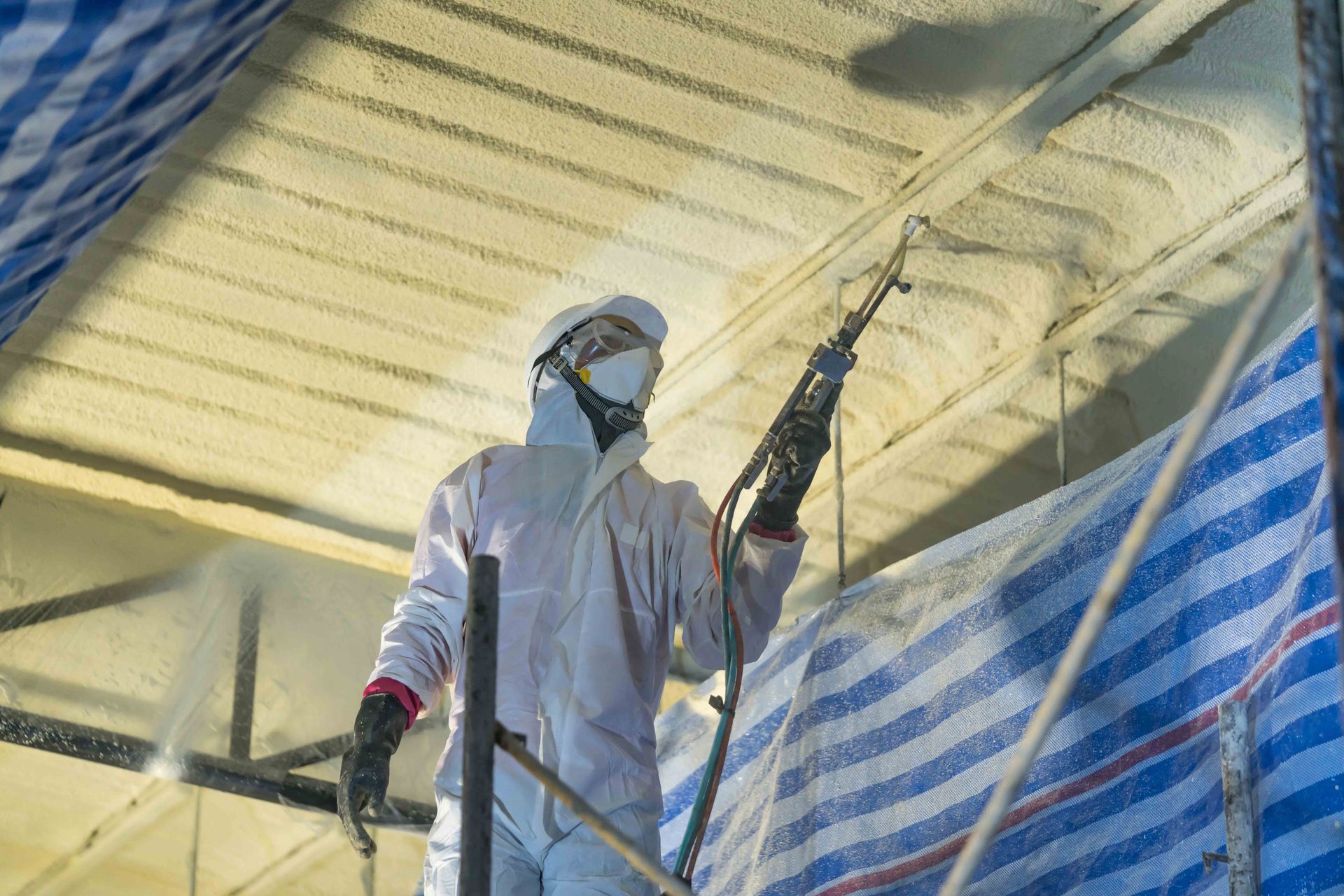
1. Spray Foam Application in Progress: A technician in protective equipment actively spraying foam onto a flat commercial roof — the expanding foam is vivid and visually striking. This is the most distinctive and shareable image for an SPF page. It communicates the process immediately and differentiates from any conventional roofing system.
2. Fresh Foam Layer — Before Coating: A wide shot of a commercial roof covered in freshly applied foam — the tan/yellow closed-cell surface showing the seamless, continuous coverage including around penetrations and edges. Demonstrates the seamless nature of the system better than any written description.
3. Foam Around Penetration / Drain: Close-up of SPF foam applied seamlessly around a roof penetration, HVAC curb, or drain — showing how the foam conforms and eliminates the joint that would exist in any sheet membrane system. Extremely effective at communicating SPF's advantage over conventional systems.
4. Completed White Coated SPF Roof: Wide-angle shot of a finished SPF roof after the protective coating has been applied — bright white, seamless, and clean. Overhead or elevated angle preferred. Mountain or Colorado backdrop adds local relevance.
5. Before — Ponding Water on Flat Roof: A flat commercial roof with visible ponding water in low spots — one of the most common problems SPF uniquely resolves. Buyers with this problem immediately recognize their own situation and understand SPF's drainage correction capability.
6. After — Same Roof, No Ponding: The same or similar roof after SPF installation with tapered foam correcting the drainage — no standing water, clean white surface. One of the most powerful before/after pairings for an SPF page.
7. Technician in PPE — Process Detail: Photo of installation crew in full protective equipment — respirators, Tyvek suits — preparing to spray. Communicates professionalism, safety compliance, and the specialized nature of SPF installation. Reinforces that this is not a DIY or cut-rate system.
8. Completed Building Exterior with SPF Roof: Full exterior shot of a completed commercial project — warehouse, church, office, or agricultural building — with the finished SPF roof visible. Grounds the system in a real-world context buyers can relate to.
PHOTO TIP: SPF installation photos are genuinely rare in local roofing marketing — most competitors don't have them. If Altitude Roofing LTD can capture quality photos of an SPF project in progress, those images will be distinctive across the entire Colorado and Utah market and extremely effective for social media and digital advertising as well as the website.





